
Active Trading or Passive Investing: Making Informed Choices for Beginners
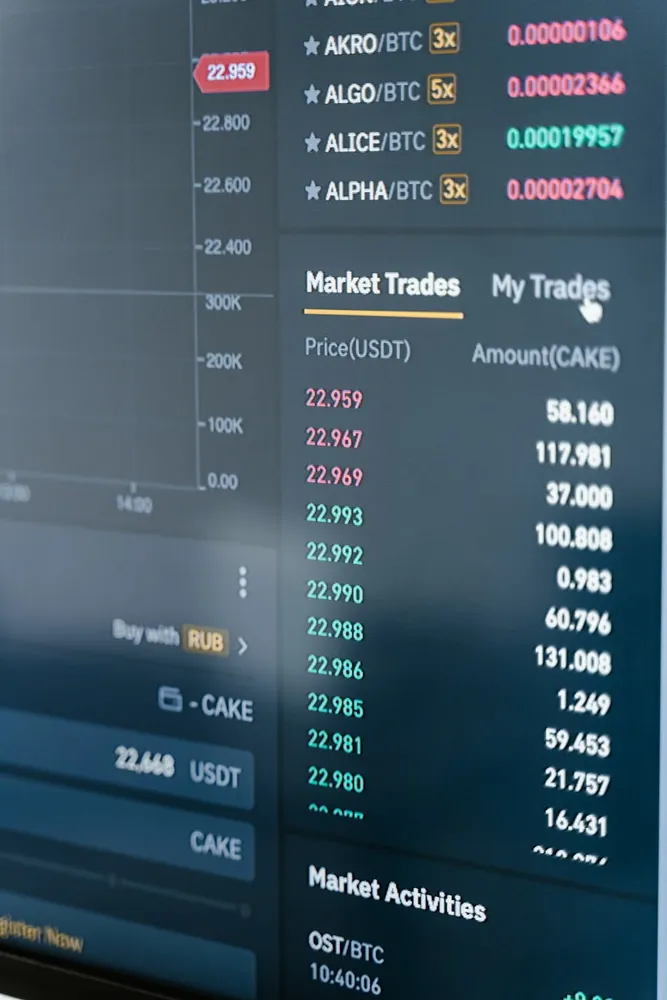
Understanding Active Trading and Passive Investing
As a beginner venturing into the world of finance, you may be overwhelmed by the various investment strategies available. Two primary approaches that often come up are active trading and passive investing.
Each strategy has distinct characteristics, benefits, and risks, making it essential to understand them thoroughly to make informed choices.
What is Active Trading?
Active trading involves frequently buying and selling stocks or other securities to capitalize on short-term market fluctuations. Traders aim to outperform standard market indices by taking advantage of price changes. This approach requires a deep understanding of market dynamics, technical analysis skills, and a considerable time commitment.
What is Passive Investing?
In contrast, passive investing focuses on a long-term strategy, typically involving purchasing and holding a diversified portfolio of assets. Investors often use index funds or ETFs (Exchange-Traded Funds) that mirror the performance of a broader market index like the S&P 500. The goal is to achieve steady growth over time with minimal management effort.
Pros and Cons of Active Trading
Pros
- Potential for High Returns: Successful traders can achieve substantial returns by taking advantage of short-term market movements.
- Flexibility: Active traders have the flexibility to enter and exit positions as they see fit, adapting quickly to market conditions.
- Leverage Opportunities: Traders can use margin accounts to increase their buying power, potentially amplifying returns.
Cons
- High Risk: The potential for significant losses is higher, especially for those without extensive knowledge or experience.
- Time-Consuming: Active trading requires constant market monitoring, research, and quick decision-making, which can be demanding.
- Transaction Costs: Frequent trading incurs higher transaction costs, which can erode profits over time.
Pros and Cons of Passive Investing
Pros
- Simplicity: Passive investing is straightforward and easy to implement, making it ideal for beginners.
- Lower Costs: With fewer transactions and often lower fees associated with index funds, the costs of passive investing are typically lower than active trading.
- Diversification: By investing in broad market indices, passive investors gain exposure to a diverse array of companies, spreading risk.
Cons
- Market-Linked Returns: Passive investors usually accept average market returns, missing out on the potential for outperforming the market.
- Lack of Control: Investors cannot react to market conditions since they follow a buy-and-hold strategy.
Choosing Between Active Trading and Passive Investing
Your choice between active trading and passive investing should depend on several personal factors such as your financial goals, risk tolerance, time commitment ability, and interest in managing investments.
Consider Your Financial Goals
If your objective is to grow wealth steadily over time with limited involvement, passive investing may align better with your goals. However, if you're looking for potentially higher returns and are willing to invest time and energy into managing your investments, active trading might be suitable.
Evaluate Your Risk Tolerance
An honest assessment of how much risk you can tolerate is crucial. Those uncomfortable with the possibility of losing significant capital might prefer the steadiness of passive investing. Conversely, if you're open to taking calculated risks for the chance of higher gains, active trading could be appealing.
Workflows for Beginners
Starting with Active Trading
- Educate Yourself: Invest in learning technical analysis and familiarize yourself with trading platforms. Consider online courses or books by experienced traders.
- Create a Trading Plan: Define your strategy clearly. Decide what securities to trade, set risk management protocols, and determine entry/exit criteria.
- Pilot with a Demo Account: Use a demo account to practice without risking real money. Many brokers offer this option for beginners.
Starting with Passive Investing
- Select Index Funds or ETFs: Research funds that align with your investment goals. Look at factors like expense ratios and historical performance.
- Diversify Your Portfolio: Choose funds covering different asset classes (e.g., equities, bonds) to minimize risk.
- Avoid Market Timing: Stick with your strategy through market ups and downs; consistency is key in passive investing.
The Role of Technology in Modern Investing
The rise of technology has transformed both active trading and passive investing. Online platforms offer easy access to markets globally. For active traders, there are tools like algorithmic trading systems that can automate trades based on set criteria. Meanwhile, robo-advisors enable passive investors to automatically manage diversified portfolios based on individual risk profiles with minimal fees.
The Importance of Continual Learning
No matter which path you choose, continual education is crucial. Markets evolve, influenced by economic changes, technology advancements, and geopolitical events. Staying informed helps ensure your strategies remain effective in achieving your financial objectives.